What If You Never Had to Sleep Again? The Science Behind Our First Episode
What would happen if you never had to sleep again? The real science of sleep loss, acted out by a stickman and Piggy, his always-hungry pet pig.
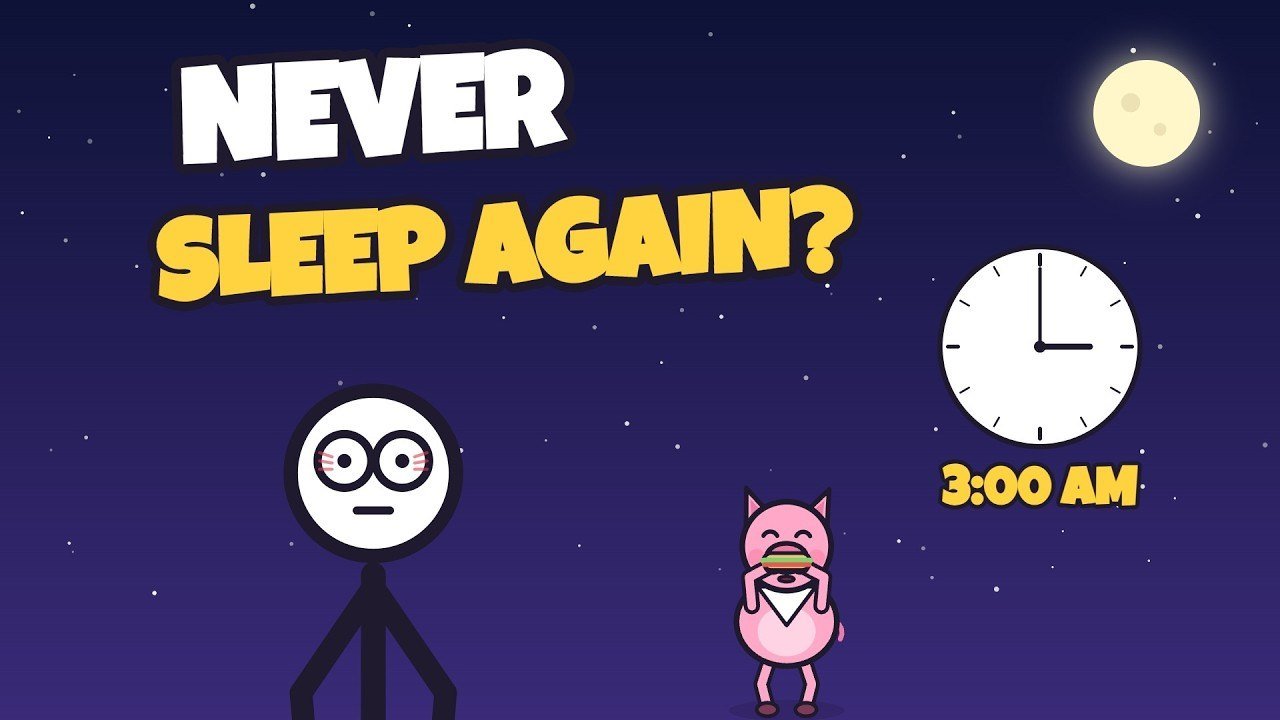
Twenty-four extra hours a week sounds like a dream. Our first What If…? episode asks what would really happen if you never had to sleep again, and Piggy, naturally, wants to know if the diner is open at 3 am.
You'd be giving up a third of your life's maintenance work
Adults are generally advised to get at least seven hours of sleep a night. Sleep isn't idle time: it's when the brain consolidates memories and, according to research in mice, clears out metabolic waste more efficiently than when awake.
What sleep loss does in the real world
- After a long day awake, reaction times and judgement slip. Studies have compared staying awake for around 17 to 24 hours with being legally drunk.
- Microsleeps start creeping in: short lapses of a few seconds where the brain simply switches off, even with your eyes open.
- The record: in 1964 a high-school student, Randy Gardner, stayed awake for about 11 days under observation. By the end he had trouble with concentration, memory and mood.
So what if you didn't need sleep at all?
That's where the episode gets silly. If your body truly didn't need sleep, the night would become rush hour: 3 am traffic jams, crowded diners and a lot of very bored people. Piggy, of course, sees it as more time to eat.
Watch every episode in the What If…? series, and tell us in the YouTube comments what we should ask next.
By Starving Piggy Productions · What If · sleep · science · animation · Piggy